
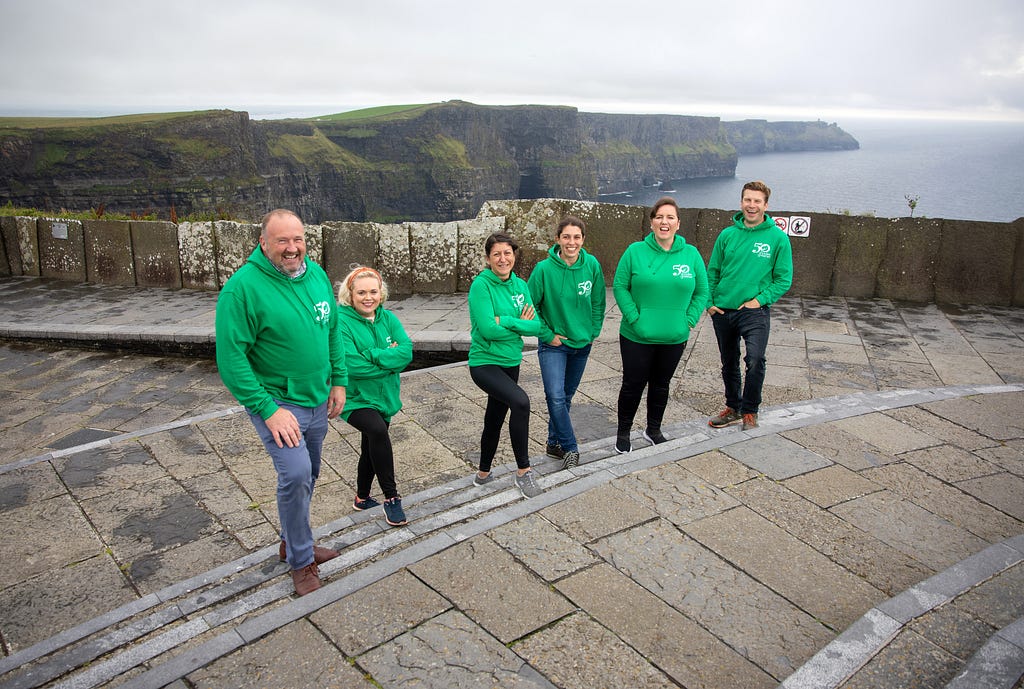
Securing our Future: Female Founders
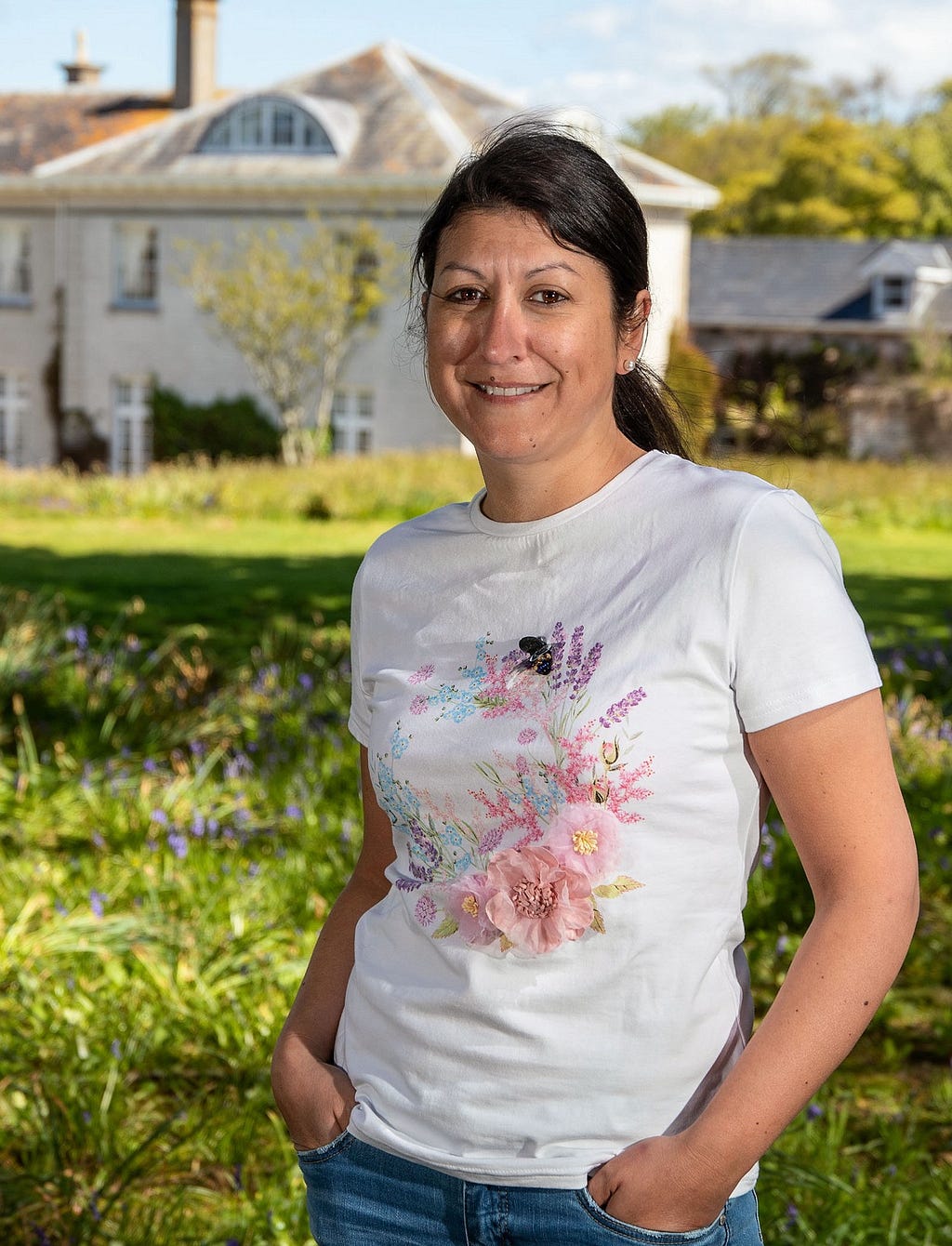
Raquel Noboa is the founder of Fifty Shades Greener, a leading educational company teaching environmental sustainability around the world. In this article, Raquel speaks directly to WestBIC, outlining her entrepreneurial journey to date.
“My own career up until 2017 was in hospitality. I kind of fell into hospitality by pure chance. I was 17 years old when my Dad offered me a one-way ticket to wherever I wanted to go. Destiny has it that a week later I landed in Shannon, County Clare. I had no English at the time and so my only option was to clean bedrooms as a Housekeeping Assistant for my first year in Ireland, which was quite a shock to my system at the time.
My immediate family are all academics; my Mom is a doctor, my Dad is a psychologist turned politician, and my sister is a marine biologist. When my parents asked me what I wanted to be when I grew up I literally had no idea. Two things I did know is that, I wanted to be challenged by my career every day but that I also wanted to have fun at my job. Needless to say they all thought I was crazy, or lazy, or a mix of both.
I’ve never been a person that learned through books or conventional educational methods, which are still very much teacher-led. When I was young, I felt inferior and not good enough because I learned in a different way than my family members. I’ve carried those feelings of inferiority pretty much my entire adult life, but I was blessed to fall into hospitality the way I did. All of a sudden, I found that place in the world where I could learn by doing. I could learn by watching other people doing their jobs and it led me to have an amazing career with many different managerial positions in different countries.
It was 2012 when I started learning about sustainability, back then climate change was not really spoken about as often as it is now. Back then, there was little explanation as to what was going on. To the regular person like me it was something that scientists and governments would argue about. I had already experienced first-hand what nature can do to humanity. I was working in the Maldives in 2004 when the Boxing Day tsunami came to Heater Island, destroying so many lives in just a few minutes. Eco anxiety is real. I suffered it myself for years after that event.
The turning point for me, was when I was working at Hotel Doolin in County Clare and I learned how to measure our business carbon emissions. This is when I realized that if I could measure those emissions, I could also manage them and reduce them. It then became my life’s mission to learn more about sustainability within hospitality and I started creating what I now call the Fifty Shades Greener Method for Sustainability.
The 50 Shades Greener method has four phases
1. First we measure. If we’re looking at environmental sustainability, we measure our impact on the environment. If we’re looking at our social sustainability, we measure the happiness and productivity of our team or how we’re impacting our wider community.
2. The second step is observation, which simply means to observe and take stock of your behaviour, your team’s behaviour, and all the systems and processes in the business.
3. From the measurement and observation phases, we come to the implementation of an action plan. What are we going to do, when are we going to do it, and how are we going to do it?
4. The last phase is to monitor and report, which simply means repeating our measurement phase periodically, to ensure that our implementation phase is working and their environmental impact is reducing, or our social impact is improving.
This is the process that we now apply with our students in all of our training programs, but also we apply it to our own company. For example, when I was the Green Manager at Hotel Doolin, I noticed that our breakfast chef used to arrive every morning around 6 a.m and turn every single machine in the kitchen on, even those machines that he would not use until later. When I asked him about it he said that was his routine, it’s what he had done all his life as a chef. He would turn everything on ready for a busy day ahead and honestly I couldn’t blame, him he’d never seen the electricity bills and nobody had ever told him to do anything different. Through the measurement phase, I found out that the main oven in the kitchen used 38 kilowatt hours of electricity and I knew that our electricity unit price was 15 cent per hour so I was able to calculate that if we were to turn off that oven for just one extra hour a day, every single day we would reduce electricity use by nearly fourteen thousand kilowatts which would save us over €2000 in one year. This was just one machine or for an extra hour a day which may seem like a really small thing to do but can generate really good results. That’s how the 50 Shades Greener Method works, we measured the energy use of our oven we observed our chef’s behaviour around the use of that equipment, we then devise the training plan for the chefs to implement new procedures to turn machines on and off and then I continue measuring our electricity use to ensure that it was indeed reducing.
Within two years of the start of our green journey at Hotel Doolin, we had reduced our energy use by 30%, waste production by 40% and water use by 25% simply by changing our team’s behaviour around the use of resources. Can you imagine what those reductions meant in terms of financial savings to our hotel?
We’ve all been born in countries where natural resources like oil, gas and water are readily available to us. It doesn’t matter how much we use as long as we’re willing to pay for it, we don’t have to think twice about waste because we put it in the bin and it disappears as if by a magic trick. These privileges we were born with had made us form our current behaviour and we have forgotten the correlation between our daily use of utilities and the environmental damage that they’re causing to the planet. When we achieved those results at Hotel Doolin, I realized that running a green hospitality business was not just a nice thing to do, it is in fact the smart thing to do. Reducing your impact on the environment by reducing energy waste and water is good for the planet but it’s also good for your pocket. This was my light bulb moment, I realized that I needed to share what I had learned with the rest of the world whether they wanted to listen or not.
In 2017 I finally took the plunge and I founded 50 Shades Greener as an Environmental Education Company for the hospitality sector. My imposter syndrome however really took hold of me for the first few years as the CEO of an educational company. How could a person without a proper degree teach anything to anyone? I’ve always wanted to be able to speak in a more flourished or professional manner. I grew up in a household where speech and grammar were absolute must-haves, but with English being my second language, once again I was left feeling inferior and I doubted my programs would be good enough. Surprisingly, it is through my everyday language, my use of colloquial terms and even my own short comings of English grammar that I started attracting students to my programs and me in particular. The feedback I was hearing was “I love the directness of the lessons”, “It’s just pure action-based learning” or “You make it all sound so easy I feel I can do it.” After my initial shock I realized that it was not my language or my teaching methods that needed to change, it was my own mindset. For years I had created this narrative in my own head that I was not good enough and the only person that could change that narrative was me. Imposter syndrome is more common than many people think, particularly among founders. However, it is only one of the many obstacles that founders and entrepreneurs will encounter, particularly when working from rural areas. One of my biggest barriers at the beginning of my own business journey was this connection and loneliness. While loneliness is a state of mind, we can’t underestimate the effects it can have when you’re trying to bring your idea to a reality. A great entrepreneur is not necessarily going to make a great CEO there are many aspects of a business journey that are not exactly what you want to be spending your time doing, yet they’re absolutely necessary to build a successful business.
The top tips I’ve learned over the past four years are:
1. Always be kind to yourself: what you’re doing is amazing, maybe not to everyone, but it’s amazing because you’re realizing your dreams.
2. Follow your instinct when making big decisions, even when the results are not what you expected.
3. Be true to yourself and learn from your failures.
4. Stay connected, particularly when setting up a business in rural areas.
5. Network with intent, so you can build your own community. Find other businesses in your local areas and speak to their managers or their founders. Surround yourself with mentors and advisors as much as possible.
6. Research what funding and help is available to you. The LEADER program, for example is a European initiative set up to assist the development of communities in rural enterprises. There are many other sources of help available in your local community
7. Always be open to listen and learn: even if you don’t follow someone’s advice, you can learn lessons from every single person you come across. continued learning is the only way to remain on top of your game.
8. When the time comes to start building your team, always put them first. Your team will make or break your business. They shouldn’t be viewed as a cost to the business. They are indeed your best assets. Treat them as you would like to be treated, and build a company that everyone wants to work for.
Building a sustainable business is the ethical thing to do, at least in my opinion. When it comes to environmental sustainability in business, it can generate huge cost savings from becoming resource efficient. Booking.com released a report to state that 87% of global travellers want to travel more sustainably. Running a sustainable tourism business will attract a carbon conscious traveller. A business that puts sustainability at its forefront will increase its reputation from the local community but also from all stakeholders. When it comes to building social sustainability into your business model, you will enjoy the benefits of staff retention, which generates cost savings from not having to recruit new people and spend time training them. It also increases staff productivity, a happy employee will perform at least 1.5 times better than an unhappy employee. The most important thing is that you will build a team of people that are happy to be working together to achieve a common goal — the goal of making your business a success.
It might seem like an odd thing to hear in the business world, but when we put people and the planet at the forefront of our businesses strategies, we can generate more profit and build a future that we’re proud of.”
Listen on Spotify or Apple Podcasts to find out more about where people miss opportunities to do something effective, how to you convince owners and managers that building a sustainable business model is the right is the thing to do and how to make connections and build a network.
For further information, contact Raquel at info@fiftyshadesgreener.ie