
AI and the New Innovation Landscape: What Start-Ups Need to Know in 2026
The innovation landscape has fundamentally shifted. If 2023 was the year the world discovered generative AI and 2024 focused on experimentation, 2026 marks the transition from AI assistants to systems that actually execute work. For start-ups, this isn’t just another technology wave, it’s a complete reimagining of how businesses operate and scale.
The Reality Check: Moving Beyond the Hype
Here’s the uncomfortable truth: while AI adoption has exploded, an MIT survey found that 95% of enterprises aren’t getting meaningful returns on their AI investments. Even more telling, 42% of C-suite executives report that AI adoption is actually tearing their companies apart, creating power struggles and organizational division.
The gap between promise and reality has never been starker.
Why Human Judgement Remains Your Competitive Edge
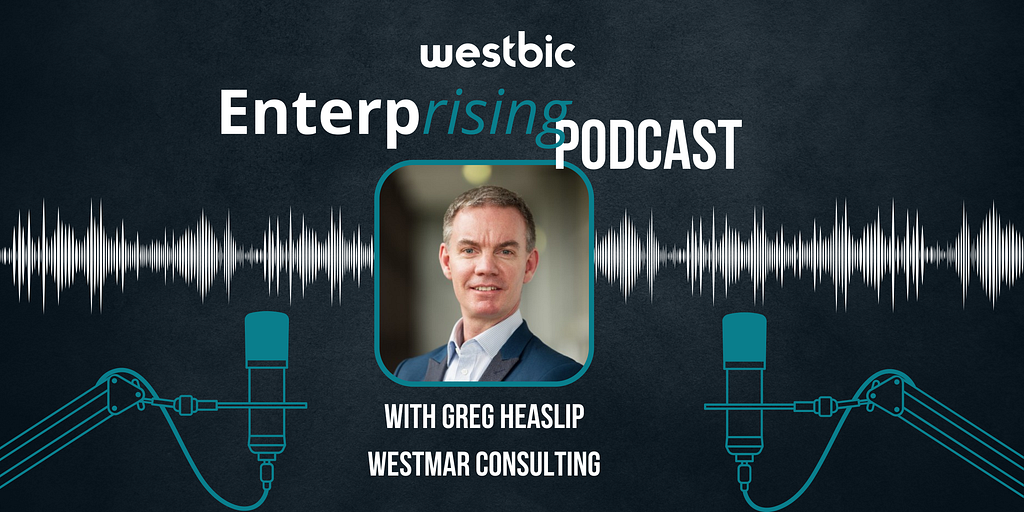
In a recent episode of WestBIC’s Enterprising Podcast, Greg Heaslip emphasized a fundamental truth: AI is a tool, not a replacement for critical thinking. While AI can accelerate research and process information quickly, your judgment as a business owner remains essential.
As AI removes old limitations around time and scale, new constraints emerge, particularly around accuracy, effectiveness, and human judgment. The organisations that thrive won’t be those deploying the most AI models, but those who understand what becomes their bottleneck once AI succeeds.
Strategic Implementation: The CLEAR Framework
Greg’s discussion of the CLEAR framework for crafting effective prompts addresses a critical skill gap. Understanding how to communicate with AI tools transforms them from expensive experiments into genuine business accelerators.
But every AI feature must answer one question: “Why does this need to be AI?” If a task can be solved with simple logic, using AI increases costs and decreases reliability. Strategic implementation focuses on tasks where data is too high-volume, unstructured, or dynamic for traditional software.
The Real Challenges
Budget Pressure: Start-ups are allocating over a quarter of their go-to-market spend to AI tools. The pressure to adopt every new solution creates financial strain without clear ROI.
The Talent Gap: Demand for AI expertise far exceeds supply. You need to make strategic choices: build in-house capabilities, partner with experts, or focus on no-code solutions.
Data Quality: AI is nothing without data, but getting quality data and managing it responsibly is a monumental task.
Customer Discovery in the AI Era
Greg explored how AI can support customer discovery and market research. AI can help you validate ideas faster and identify patterns in feedback. However, your conversations with real customers, your industry knowledge, and your ability to spot nuanced opportunities still drive meaningful insights.
Practical Steps for 2026
Start with Real Customer Pain: Validate that your product addresses verifiable customer pain through structured interviews. Ask potential customers to rate the problem’s importance on a scale of one to ten. If it’s not consistently above seven, keep searching.
Develop AI Literacy: Everyone needs enough fluency to use tools, ask good questions, and interpret outputs. This isn’t about making everyone a machine learning expert.
Prioritise Integration Over Features: Choose tools based on how well they integrate with existing systems. A platform with 80% of features that connects seamlessly delivers more value than feature-complete tools in isolation.
Establish Clear Governance Early: Build AI usage policies, ethical frameworks, and security protocols into your foundation from day one.
Measure What Matters: Focus on concrete efficiency gains, revenue velocity, and customer outcomes, not vanity metrics.
The Innovation Imperative
For start-ups this creates unprecedented opportunities. You don’t need massive infrastructure or Silicon Valley connections to compete. What you need is clarity about the problems you’re solving, judgment about which AI capabilities genuinely serve those problems, and the discipline to maintain your critical thinking.
As Greg emphasised, AI works best when it augments your expertise rather than substitutes for it. The start-ups that will lead aren’t those with the fanciest AI tech stack, they’re those that understand their customers deeply, make informed decisions quickly, and use AI to multiply their impact while maintaining the human judgment that creates real value.
The innovation landscape of 2026 demands both boldness and discernment. AI is the accelerator, but your vision, judgment, and customer understanding remain the engine.
Ready to explore how AI might fit into your start-up’s strategy? Connect with WestBIC for guidance tailored to your business stage and sector. Listen to our full conversation with Greg Heaslip on the Enterprising Podcast for deeper insights.